Labels

Showing posts with label Panama. Show all posts

Sunday, January 15, 2012

San Blas: A Backpacker's Paradise


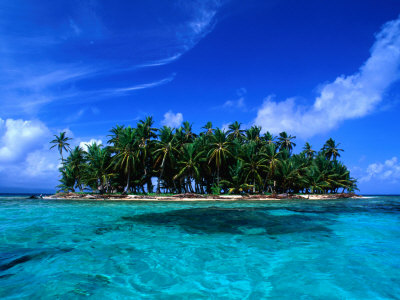
San Blas is, hands down, the #1 best place I've visited abroad.  An archipelago of 378 islands (49 inhabited) off the Caribbean coast of Panama, San Blas is also home to a second indigenous group, the Kuna Yala.  Though it's a bit difficult to reach, whatever troubles are encountered on the road are more than compensated for by the simple beauty, serenity, and relaxation offered on these islands.  


The San Blas islands are notoriously difficult to reach.  While those with enough money can easily fly in on a small plane, the rest of us must take a transport or drive (the road requires 4WD) from Panama City on the Pacific Coast to the Kuna port on the Caribbean side.  Simple enough, right?  


Wrong!  

The road connecting the Pacific and Atlantic coasts traverses mountains and valleys and is treacherous mostly due to the heavy rains and topsoil erosion.  In some extreme cases, as shown in the picture above, the land supporting the road is simply washed away.  The Kuna tribes usually organize roadside work crews to repair damage, but sometimes it becomes necessary to close the pass for weeks or months at a time.  

View from the roadside
After a 3-hour drive from the city, visitors must take a launch at the Kuna port to the island of their choosing.  Those who visit during the 9-month rainy season, as we did, risk chances of heavy rains during their stay.  Below are some photos of a particularly adventurous ride home from our island...


 Francisco and I always chose Isla Franklin/Isla Tony as our destination.  This particular island, named for its joint owners who are brothers, is divided into separate properties.  As the story goes, their father bequeathed the island to the two sons, who never resolved their differences and split their inheritance accordingly - with a metal fence that runs the length of the island (some 70 yards or less).  
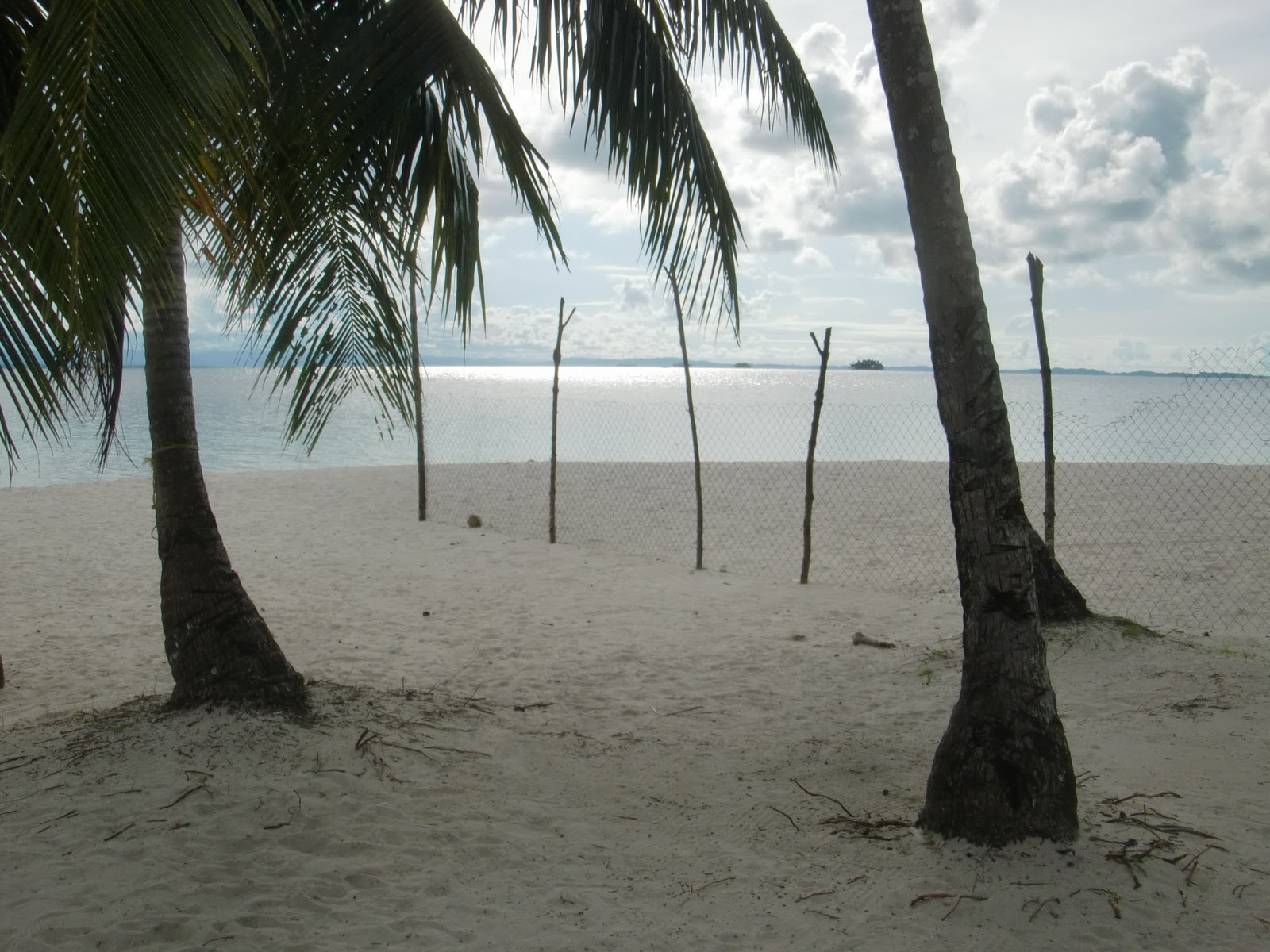

Once on the island, most tourists don't don any apparel other than their bathing suits for the duration of their stay.  We ate in bathing suits, swam in bathing suits, slept in bathing suits.  As the accommodations are little more than rudimentary palm huts with sand floors, most of us didn't even bother to shower until our final day.  Below is an example of our sleeping quarters - those that didn't want to share a room could spend the night stargazing in a handmade hammock.  


One of Isla Franklin's best qualities is the cost.  It's quite affordable to spend a weekend in paradise - below is an estimated expense list.

Gas (or transport) - $40
Parking (if no transport) - $7
Taxes (depends on nationality - cheaper for Panamanians) - $10 - 20
2-way Launch - $40
Hut (1 night, includes 3 meals) - $9-30
Total - $106 - 137

These prices are flexible depending on your relationship with the Kuna Yala.  They sometimes offer discounts to frequent visitors and are flexible with regard to payment - some Kuna have been known to offer rides to tourists in exchange for beer and other goods. 


In addition to a generally relaxing atmosphere, the islands also boast wonderfully preserved coral reefs for the snorkeling crowd.  One island in particular, Isla Perro, is a popular destination for those interested in exploring shipwrecks.  See the photos below from a recent adventure...


View above water...
View underwater - this was a hole on the ship's surface


Finally, San Blas offers the cheapest crab ($10) and lobster ($20) dinners around.  The first time I asked Franklin if they had any lobster in stock, he told me that at the moment no, but that I should wait until night to see what they caught!  As it turned out, it was a good day for catching critters:


That night, the Kuna summoned us to dinner in the same style as every meal - with a conch shell.


Additional photos from previous trips can be seen below.  Please note that all pictures in this post are from my personal collection.  None have been borrowed, downloaded, or edited. 


We had to watch out for the jellyfish!


Sunday, October 2, 2011

Panama: First Impressions and Stereotypes


When I had arrived in Chile, I was somewhat prepared for the culture and history of the country that awaited me.  I had studied the Pinochet dictatorship in a politics class, had read famous poet Pablo Neruda's literature, had learned some of the local Chilean slang.  

Not so with Panama.  I arrived with only a few ill-formed stereotypes and no real knowledge of the country in which I would spend the next year of my life.  I thought I was entering a humid, tropical third-world country where no one spoke English.  

To discredit a few stereotypes and give an impression of the real Panama, I offer the following general information to my readers:  

1.  Though Panama may be considered a third-world country by some, the capital itself bears more resemblance to Miami than to the typical Central American city.  In fact, for me the only major difference between Panama City and any American city was the language.  To illustrate my point, below you can see skylines of both Panama City and Miami - can you tell which is which?  


2.  Lots of folks in Panama speak English.  And not just those who were born to American families in the Canal Zone, either.  The U.S. involvement in the canal's construction and operation influenced Panama in many areas, one of which was the English language.  Even the Spanish spoken in Panama is peppered with English phrases:  "Oh my God," "cool," "pritty" (which comes from "pretty" but is closer to "cool" in meaning), "plis" (please), and "man" just to name a few.  


3.  In Panama, they don't eat tacos and burritos.  This is a common misconception that comes from our tendency to associate Mexican food with all Southern cultures.  Rather, Panamanians prefer seafood, rice and beans, patacones (fried plantains), and a variety of meats.  For more on Panama's cuisine, go here


4.  The Panama Canal is not the only tourist attraction in Panama.  This country boasts some of the most beautiful beaches with some of the biggest waves on the Pacific side, and actually hosted this year's Billabong ISA Surfing Games.  Panama, like Costa Rica, also offers lots of jungle for those who dare to explore, along with an extinct volcano for the hikers.  Finally, view my post (coming soon!) on San Blas for the ultimate Caribbean paradise.  


Saturday, October 1, 2011

Intro to Panama

Panama was the second country in which I lived after leaving the U.S.  Here's the scoop:

About half-way through my time in Chile, I decided I wasn't ready to head back to the States just yet, so I began searching for opportunities to extend my time as an expat.  One of those opportunities I found was through AIESEC, a student-led organization I had joined during my senior year of college.  AIESEC offers international internships across various fields and currently extends membership to about 110 countries.  It's a great (and safe) way to travel abroad while pursuing a professional career.

The position I found through AIESEC's database was an English-teaching traineeship in Dell's call center in Panama City.  The intern was expected to create and deliver a Business English curriculum to agents of the call site's various Business Units.  The majority of the participants were Panamanians who spoke Spanish as their first language, but responded to calls from the U.S. and Canada in English.

I completed the interview via Skype shortly before the Machu Picchu tour (THAT was an interesting experience - try scheduling and completing an interview in a third-world country while on vacation and without reliable internet access) and got the job!  The original contract was for a 6-month period, but was later extended to a full year.

Upon completion of the Chilean teaching program, I flew directly from Santiago, Chile, to Panama City, Panama without even a stop in the U.S.  This means that I traveled from chilly Chile to tropical Panama with all my winter gear in tow - a fun start to a new chapter in my life abroad.

Wednesday, October 6, 2010

Military Leftovers from the US

Some of Panama's most intriguing landmarks are the abandoned bases left from the US military involvements in the 20th century.  These bases serve as stark reminders not only of the extensive canal construction, but also of the brief US invasion that eventually ensued.


One of these, the Howard Air Force Base, was first used during WWII and is now home to a Dell Computers call center, my source of employment.  I tried to shoot some photos during a joyride with my family, but we were approached by a Panamanian officer who informed us that photography of old buildings within the bases is strictly prohibited.  Fortunately for my blog viewers, he didn't delete the pictures I had already taken:  

Dell 
A residential building
A bunker from WWII

The same bunker - inside the gate 
Howard as seen today
Some of the bases have been developed into residential areas and shopping attractions.  The Howard Base is no exception:  Panamá Pacífico has been in development since 2007 and will be one of the largest real estate projects implemented in the country.  

A residential area in Howard
In other areas of Panama, the military buildings have been left virtually untouched.  Their general dilapidation lends to an eerie atmosphere: 


All of the bases were handed over to the Panamanian government in 1999 in accordance with the Torrijos-Carter Treaties and were subsequently auctioned off to the highest bidders.  Some were sold faster than others - Panama's biggest shopping mall was established in Albrook, Clayton and Sherman were converted into residential areas, and Amador was transformed into a series of touristic islands, but more isolated areas such as Howard were not bought and developed until relatively recently.  

Albrook Mall
Clayton
Amador
Though the deteriorating bases do not add much touristic value, those interested in the more historic elements would no doubt enjoy a cruise through any of the previous military establishments in Panama.  Other visitors would perhaps enjoy the more dated ruins of Panama's Spanish inhabitants from the 16th century - Panamá la Vieja and Portobelo (coming soon).